
The Little Book of Ikigai
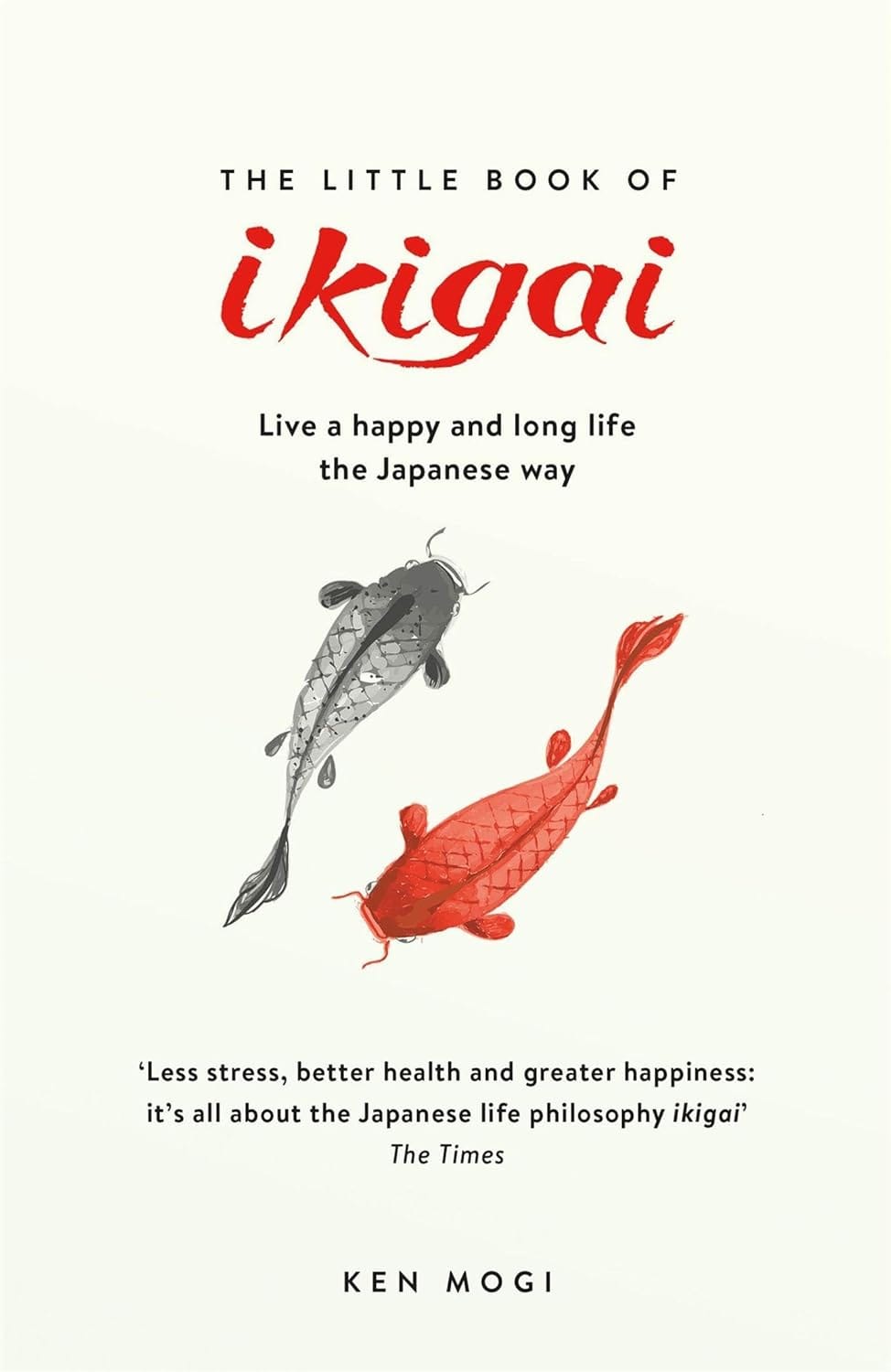
Note: There’s another, similarly titled book by Héctor García and Francesc Miralles called Ikigai: The Japanese Secret to a Long and Happy Life, originally published in 2016. These are my notes on Mogi’s book, which was published in 2017.
It’s easy to overlook this tiny book on store shelves among dozens of over self-improvement frameworks. But if you want to know what ikigai really is and means, it’s a quick, surprisingly comprehensive read.
Look up “ikigai” and you’ll probably see this venn diagram:
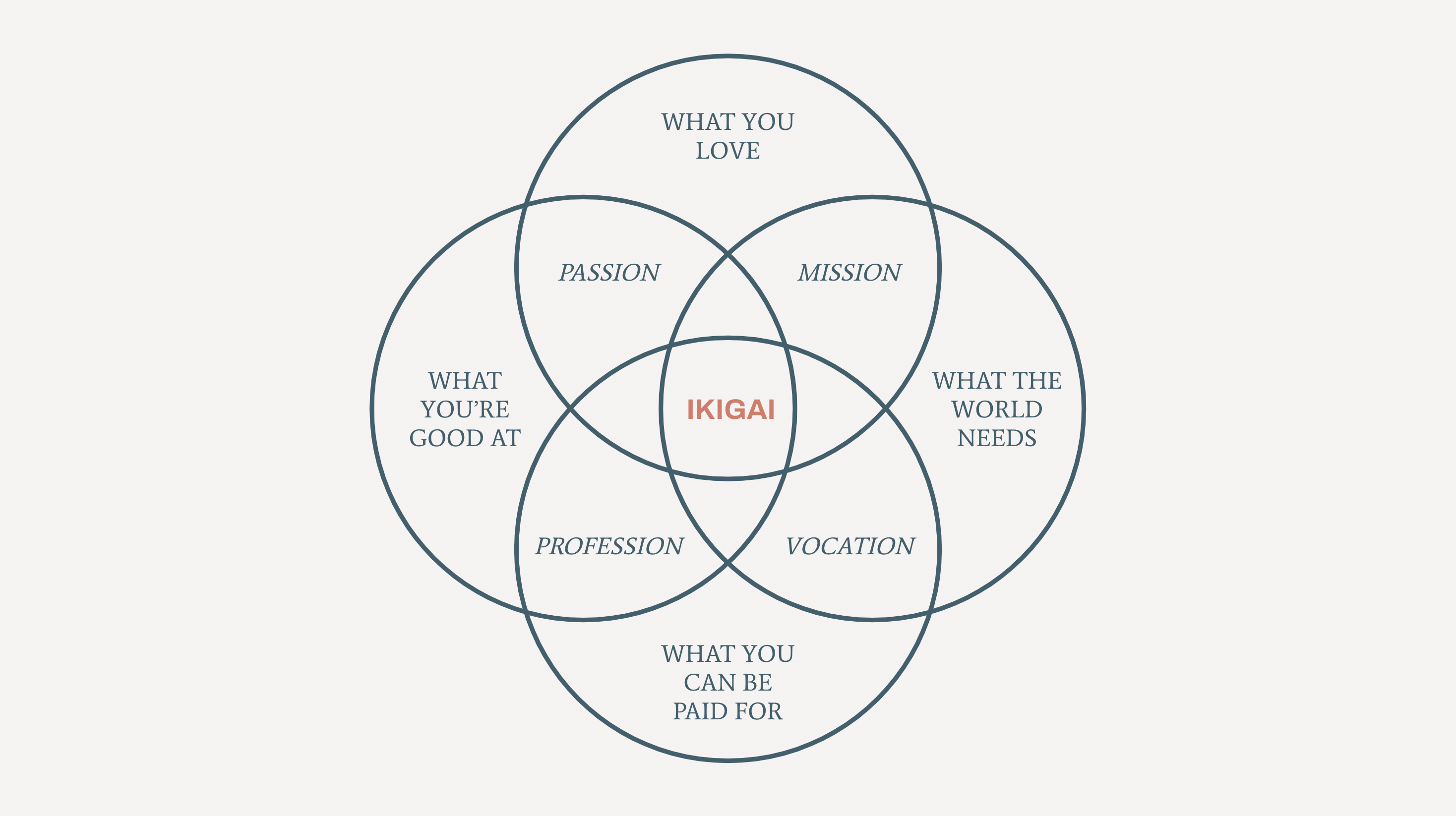
The Western approach to ikigai boils this concept down to what you can contribute to—guess what?—your job! In reality it’s an entire philosophy that, if practiced consistently, helps retrain your mind to find joy in the little things.
What’s in it
It might seem at first like Mogi’s giving away the secrets right on the back cover:
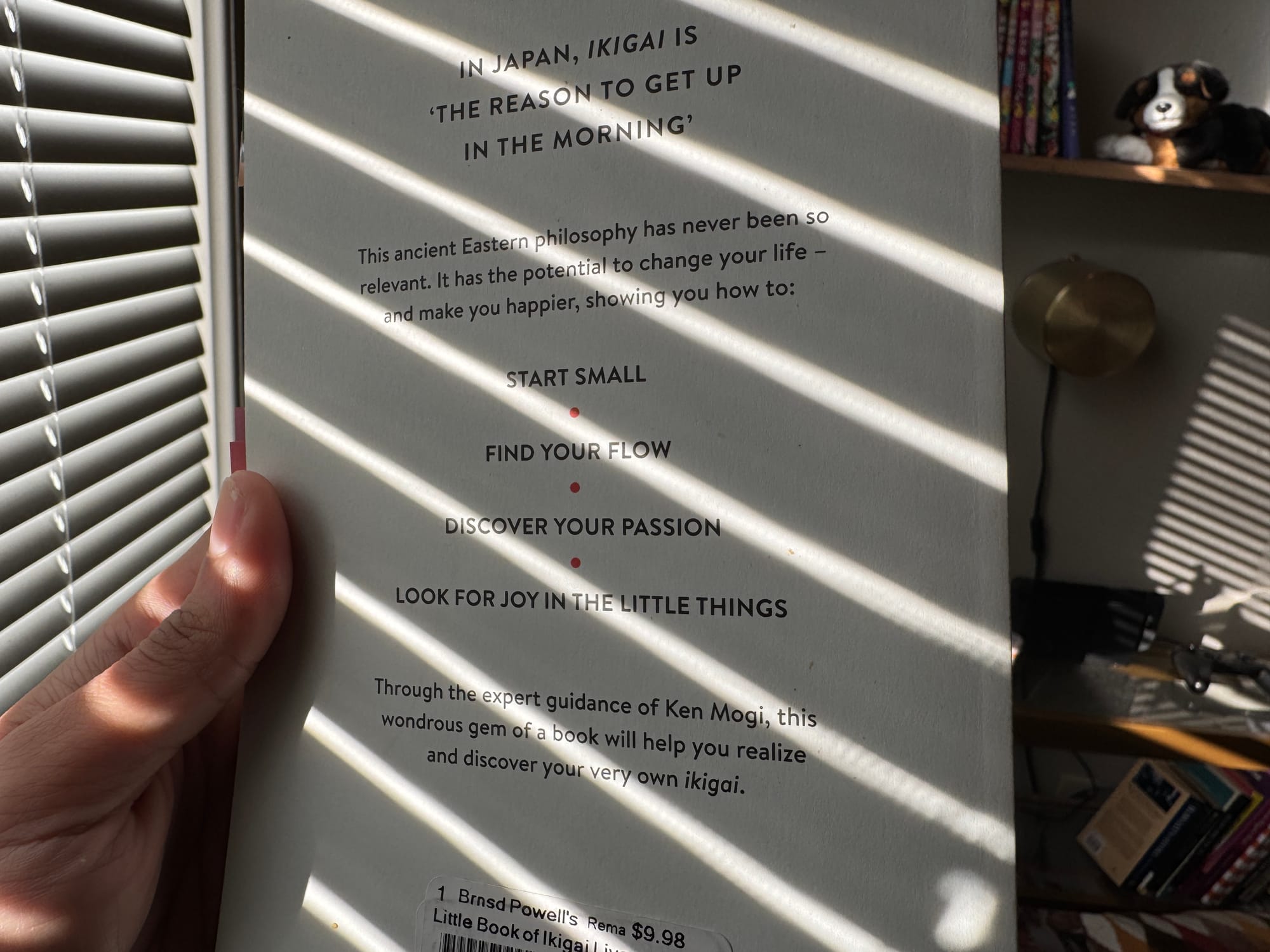
In my experience, all four of these principles are easier said than done. This book show you how other successful people find ikigai—and hopefully helps you rethink what success looks like to you.
These practices stick easier you break them down into what Mogi named the Five Pillars of Ikigai:
- Starting small when working out the problems of your life
- Releasing yourself from expectations—others and your own—as well as work that’s detrimental to your health
- Embracing harmony and sustainability in the world around you—a reminder that you’re part of nature and your community
- Finding the joy of small things in your everyday life
- And being in the here and now—living with what the spiritual girlies call “mindful intention”
You don’t need to be rich or blessed with hours of free time a day to find your ikigai! Rather than just telling you to do the things, Mogi offers examples of people from all walks of life, from fishmongers to celebrities. Rather than a thing you have to constantly track or measure, it’s more like a mindset. Everyone can find ikigai, if they’re willing to look for it.
Who this is for: Chronic New Years resolution dropouts looking for a more sustainable approach to self-growth
Who it isn’t for: People who like being told what to do
What I learned
My biggest takeaway from this book is that ikigai is the art of making the best of your circumstances, beginning with finding enjoyment in the small moments that make up your life. Some people spend their whole lives chasing a focusing illusion—an aspect of life they’ve come to believe is mandatory for their happiness.
For example, rather than honing in on extrinsic goals like stacking cash, getting married, etc., my ikigai is found in writing sessions in beautiful spaces, keeping my houseplants happy, and sharing what I learn each day. Developing intrinsic motivation in this way is already making my work life feel simpler and more fulfilling, and helps me appreciate my personal life more deeply. (Which got me back into playing my bass guitar!)

Is it ADHD-friendly?
Despite its diminutive size, not really. If you have trouble reading walls of text, I recommend grabbing the audiobook.
Bottom line
Buy this book if you’re feeling behind in life; if you know you need to find purpose but don’t know where to start; or if your it feels like there’s too much chaos in your day. I hope it helps you find a fresh perspective!
Member discussion