What do we want our post-social media world to look like?
“Let’s not forget that, in a time of increasing climate-related events, those who help you will likely not be your Twitter followers; they will be your neighbors.” - Jenny Odell, How to Do Nothing
“It’s hard to compete with convenience.”
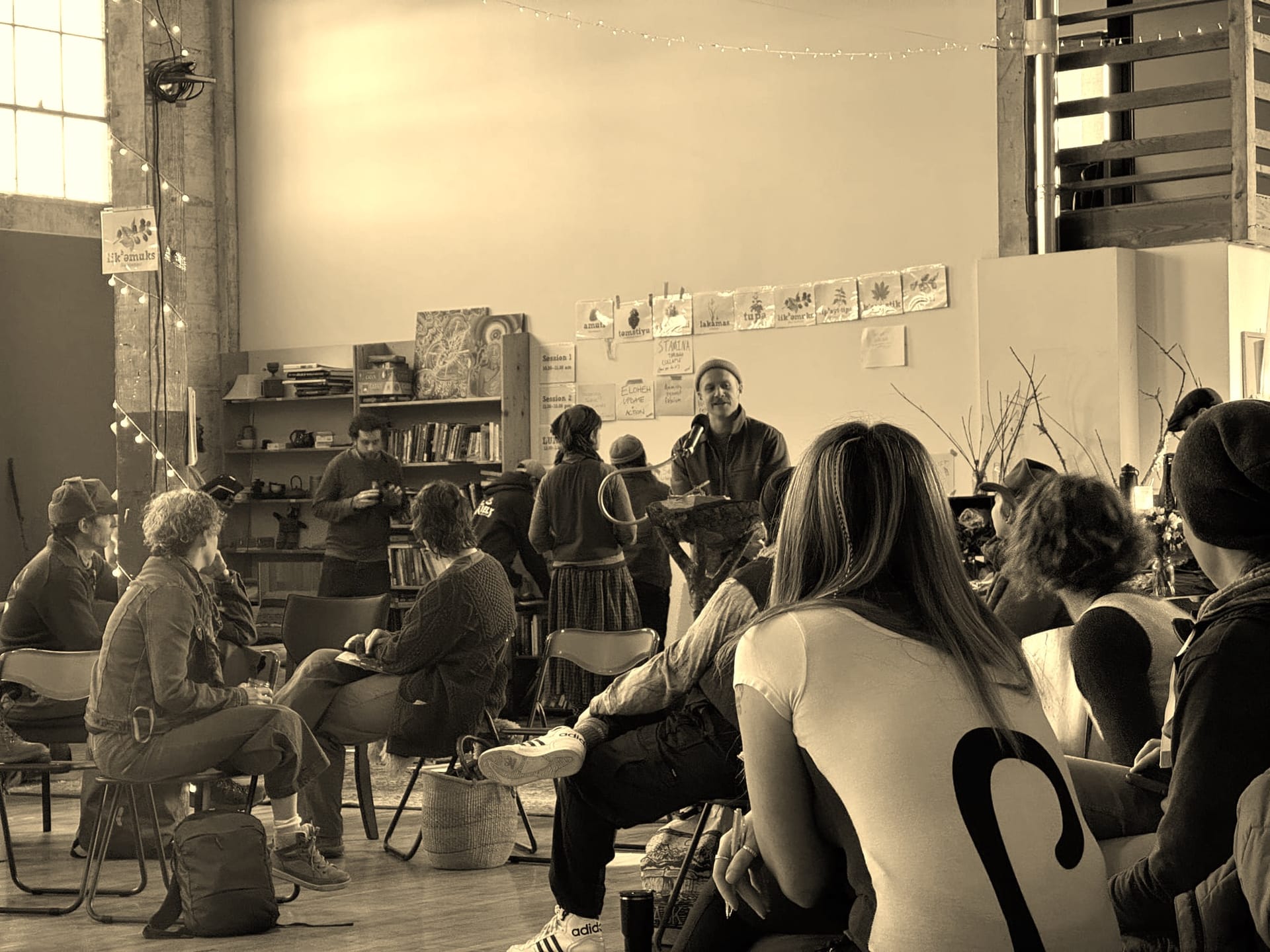
Yesterday I sat in a circle of chairs with a dozen other people and brainstormed new ways to save the world from impending collapse. Sort of. A man in a bright green suit originally sat next to me, whose job was traveling to conventions—usually anime. He wandered off to another session and was replaced by Johnny, whose point everyone understood all too well.
Back in 2012, the slogan was “Content is king”. These days, it’s “Information is currency.”
Day 2 of the 9th annual Rewilding Conference—it was my first time there, and only my second conference since the end of lockdown. Everyone I spoke to the day before ensured me that day two was the one be early for—the Open Space sessions, or what they call in the tech sector, the unconference. An opportunity to hold and attend sessions completely outside of hierarchy: announce a session anything you want, pick a space and time to hold it, and the people will come.
I’d find out later my next-chair neighbor is the husband of this session’s facilitator, Simon, who is kind of a badass. Well, both of them are (more on that later). She gathered these people to rethink networking in a post-social media world; while our culture has optimized for individual convenience, a growing movement is deliberately choosing the harder path of rebuilding face-to-face community alongside online spaces.
The world’s largest platforms, which collectively serve billions of users, are all controlled by five tech billionaires. No wonder there’s growing concern over the shrinking of third spaces, and privacy, and methods of sharing ideas outside of censored, algorithmic online town squares.
A guy named Tad, who’d have been right at home at my alma mater Wikimedia, started to suggest a federated online platform, but quickly laughed it off. We all saw how Mastodon went down with the general public. “No one wants to sign up for tad.social.”
So the question of the hour stood: when the era of social media inevitably collapses, what community structures should we build to catch us when we fall?
We’ve sacrificed more at the altar of convenience than we know
After COVID ripped through the global populace, many Americans "lost their tolerance for social friction." When it comes to convenience, movie theaters can’t possibly compete with Netflix; and why sit down at a restaurant when Grubhub is right there, right?
Not to mention dating apps feel safer than prowling (or being prowled on) at some bar. The internet in general changed the game for introverts’ social lives (I miss Livejournal and DeviantART so much), but with AI chatbots in the mix, we’re starting to see LLMs to replace human interaction, to terrifying—even fatal—effect.
So, what are we doing about it?
We settled on one thing early on: when it comes to the US, we need a double-pronged approach that protects offline spaces while building new online systems outside of Big Tech.
I’m not saying we should circle the wagons and embrace xenophobia. Instead, it’s past time we take a step back from the hustle grindset, hyperindividualistic approach to “community” and explore hyperlocal ways to reintroduce ourselves to our physical and idealogical neighbors.
Online “communities” vs. online community
As a recovering marketing person, I get one of two responses when I introduce yourself as an aspiring community organizer:
- Normal people: “Oh cool! What sorts of events are you working on?”
- Very Online people: “Nice! What’s your follower count?”
A symptom of social media’s transformation from community platform to influencer marketing engine is this annoying disconnect between what business bros think community is (a place to amass suckers to sell courses to) and its reality: we are social creatures, naturally bent on doing stuff with each other.
Anytime the conversation turns to online communities, of course Wikipedia comes up. Unlike the Fediverse, it isn’t too complicated to get started editing hyperlocal knowledge and community pages.
A vast network of volunteer editors from all over the world choose to maintain knowledge and organize events across locations, niches, and languages. Even though the work is decentralized, local cultures remain intact: Japanese editors are best suited to maintain Japanese Wikipedia, German Wikipedians dominate German Wikipedia, etc. but also user groups and chapters reach across the aisle to moderate specialized topics like WikiWomen in Red. It just makes sense.
Embracing the “connector” mindset
There’s a reason zines came back with a vengeance during COVID. Teaching people new in creative ways saves us from shortform video brain rot and gives us something truly engaging to do. Bosses can record your keystrokes, tech oligarchs can take your data and run with it, but zines—and printed newsletters, and physical bulletin boards—can’t be censored.
We’ve been sold a myth that community has to cost money (some gym memberships cost more than my student loans.) Traveling third spaces are growing alongside brick and mortars. We can take advantage of the public parks and libraries our taxes pay for to create events, or find local businesses willing to donate their space (or offer for a small fee). Pop-up literary salons, impromptu body doubling sessions, and roving concerts take a little effort to organize, but with some consistency they can gain steam. Once a small event becomes moderately popular, it can begin to self-govern.
Winters in the US Pacific Northwest are a notoriously difficult time for adults to make new friends. What Johnny said stuck with me: you have to be intentional, and find ways to make yourself “useful.”
Sounds a little mean, sure. But he’s not wrong. “You need to know yourself, and know your goal. And then be the person who connects other people instead of just centering yourself.”
Hyperlocality won’t solve everything (and that’s okay)
Federated communities, online and offline decentralization…these are all tools to get us back on our feet after the “world’s on fire” phase is over—if it’s ever over. I don’t want to be all doom and gloom here; our rights are actively going down the drain faster than we can sieve them up. There is no easy answer to addressing the impending collapse to our social structures. Small decisions lead to big action, and experimenting with the opportunities at your disposal puts your brain to work while showing the people around you we still have agency.
Maybe it’s time to get a little more mindful about those small, transactional moments of our commutes, grocery trips, run-ins with random neighbors. Failing to protect those moments means we won’t know how good we had it until they’re all gone.
Member discussion