AI artists are missing the point
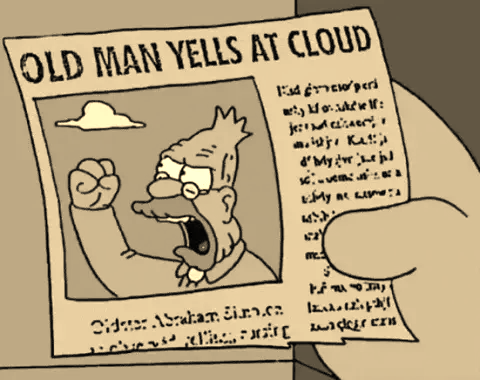
It’s kinda comforting to see that Brandon Sanderson shares the deep dread I feel when another AI-generated book cover slides across my feed. Even accomplished authors sometimes worry if they’re the cream of the next crop of luddites, grasping desperately at their obsolete, ChatGPT-less Google Docs and empty Ulysses screens, shaking their fists at the clouds.
This isn’t that, though. I can’t look away from the converging wildfires of generative AI and anti-intellectualism in the 2020s. I know the two phenomena are inextricably linked. I just can’t prove it.
…eh. I kind of can, actually.
I read Tom Nichols’s The Death of Expertise shortly after it was published back in 2017. His foreword reads:
“The foundational knowledge of the average American is now so low that it has crashed through the floor of “uninformed,” passed “misinformed” on the way down, and is now plummeting to “aggressively wrong.” People don’t just believe dumb things; they actively resist further learning rather than let go of those beliefs. I was not alive in the Middle Ages, so I cannot say it is unprecedented, but within my living memory I’ve never seen anything like it.”
That was eight years ago. Before TikTok, before the proliferation of AI content, and long before Project 2025 came to kick us all in the shins. It also talks about how access to unlimited information has made us dumber than ever before.
And the slop content that’s making us stupid also makes it that much harder for the thousands of incredible artists and creators out there to get a leg up. Big names are doing fine—Markiplier went from being the “unproblematic horror game guy” on YouTube to launching his debut film, and Sanderson certainly isn’t going anywhere, either. But smaller creatives are struggle to get seen over content that is the digital equivalent of jingling keys in a baby’s face.
That’s because we’re competing with people who’ve conflated art with products.
This is my Roman Empire. I’ll say it until I’m blue in the face:
Art is a practice! Not a product!
Make Art Not Content claims that creation lies on a spectrum of content creators, craftspeople, creatives, and artists. It sounds a bit pretentious, but the idea is that content is designed for views and attention, while art is meant to send a message.
In that sense, an artist can be a creator, but not all creators are artists. There’s a difference between daily uploads of body cam commentary on YouTube and, say, Heated Rivalry; neither one is slop, but neither are exactly highbrow, either.
Film critic Roger Ebert thought that “video games can never be art” because games’ focus on winning made it “innately commercial.” In 2026, we know now that not only can games involve winning, they can also tell a story, move you to tears, and teach you about yourself and the world around you.
I used to think AI was a threat to creative pursuits as we know them. I don’t anymore.
Yes, it’s still a nightmare for the environment and creative industries and the internet as we know it. But it’s not going to stop authors from publishing real books, or developers from dropping great games that move people.
AI is a threat to our ability to be uncomfortable and ambitious. It comforts and soothes people into complacency. That’s what we should fear, in my opinion.
Art is meant to be practiced. You can’t become a good kickboxer without working on your switch kick, and you can’t become an artist without showing up and making something yourself.
The way I see it, without something to show up for, it’s that much harder to get off your ass and make something of yourself.
Thanks for reading! Subscribe for free to receive new posts and support my work.
Member discussion